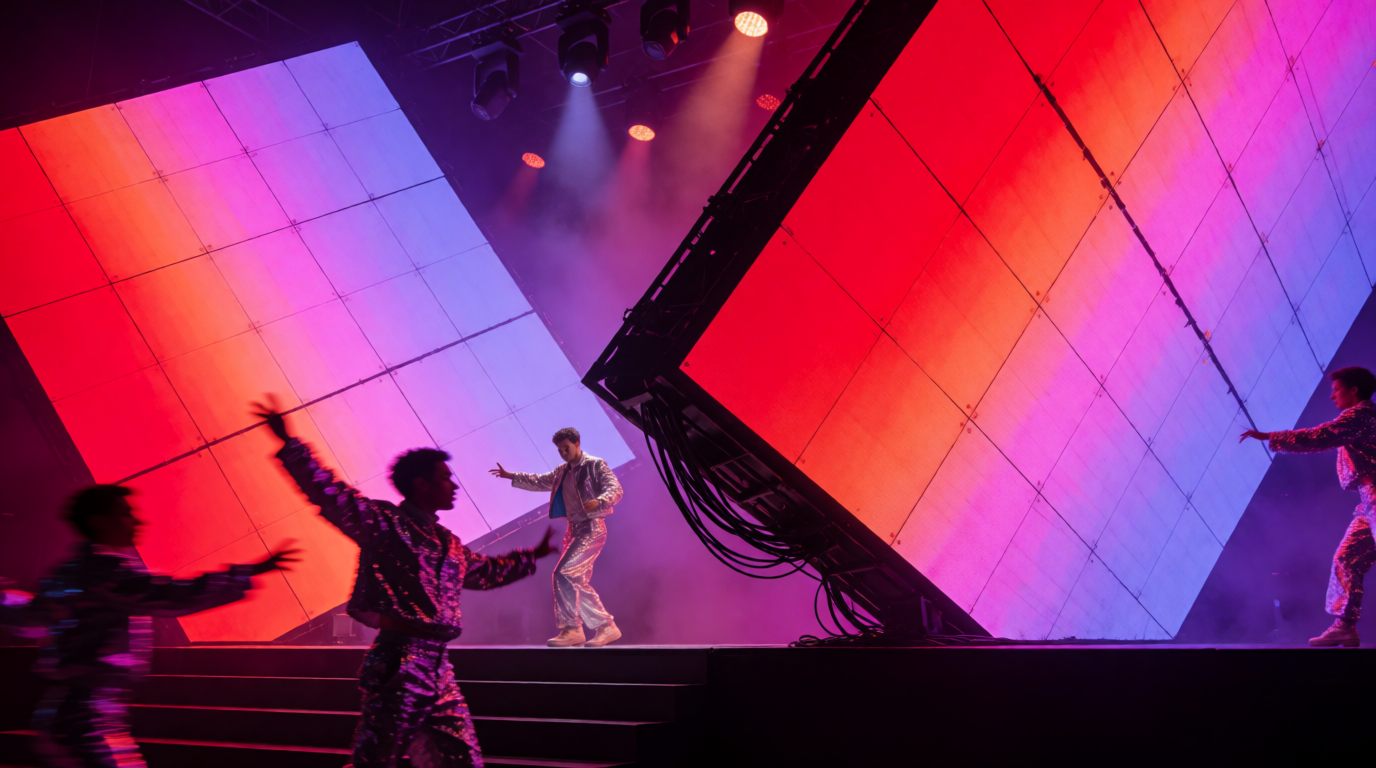
The general session gets the budget, the LED wall, and the glamour. The breakout rooms get the leftovers, and then they get forty simultaneous sessions, each with a presenter who has never met the room. In convention hotels and conference centers, breakout AV is where most complaints are born, because there are so many rooms and so little attention per room. Efficiency here is not frugality, it is a competitive advantage.
The Rise of the Concurrent Session
Multi-track conferences are a postwar invention. When professional societies and trade shows grew in the 1950s and 1960s, organizers discovered that audiences wanted choice, and hotels began subdividing ballrooms with operable walls and airwalls. The AV industry responded with portable carts, slide projectors, and later LCD projectors. The modern breakout room, with its laptop input, wireless mic, and confidence monitor, is a descendant of those carts, reinforced by decades of hard lessons.
Standardize Ruthlessly
The single best efficiency move is standardization. Choose one room kit and replicate it everywhere. A typical kit includes a projector or LED display, a screen, a laptop switcher, a lectern mic, a lavalier or handheld wireless, a small PA, and a wall plate with HDMI and USB-C. When every room matches, technicians learn one system, and spare parts fit all.
Document the kit as a room standard with photos, cable lengths, and rack layouts. Brands such as Extron, Crestron, Biamp, and QSC Q-SYS support repeatable room designs, and presets keep every room behaving identically.
Choose Presentation Switching That Presenters Can Survive
Presenters bring MacBooks, Windows laptops, tablets, and adapters that only work on the first try in a quiet kitchen. Provide universal inputs such as HDMI, USB-C, and wireless presentation, and label them clearly. Systems like Barco ClickShare, Crestron AirMedia, and Mersive Solstice let presenters share content wirelessly, though they need backup wired inputs.
Use a scaler or switcher with EDID management, such as those from Extron or Kramer, to prevent handshake failures. A laptop that cannot see the display is the most common breakout emergency, and good EDID handling eliminates a large portion.
Build Audio That Fits the Room
Breakout audio succeeds when it is simple and clear. Use ceiling speakers or small column arrays such as Bose ShowMatch, Fohhn Linea, or Renkus-Heinz IC Live for even coverage, and avoid overpowering the room. Add a wireless lavalier or handheld from Shure, Sennheiser, or Audio-Technica, and a gooseneck lectern mic as backup.
For Q&A, include a handheld mic or a ceiling array like the Shure MXA910, which can capture audience questions without microphones in hands. Pair it with DSP from Biamp Tesira or Q-SYS to handle echo cancellation and feedback suppression.
Make the Room Visible to a Central Team
Fifty rooms cannot be walked every ten minutes. Use monitoring tools to see them remotely. Crestron XiO Cloud, Extron GlobalViewer Enterprise, and QSC Q-SYS Reflect provide status dashboards, showing which projectors are on, which mics are muted, and which devices have failed.
Pair monitoring with a help desk or dispatch radio channel. When a presenter calls for help, a single dispatcher can send the nearest technician. The same system can log repeat issues, revealing a weak projector or a bad cable.
Pre-Test Everything Before Doors
Efficiency is built the day before. Run a room check on every room, using a checklist that covers power, video, audio, wireless mics, lectern, lighting, and Wi-Fi. Take a photo of the final state, and tag it in Airtable or a shared sheet.
Use test content, such as a title slide, audio clip, and video, to verify sync. Check sightlines and screen size, and adjust for ambient light. A fifteen-minute test per room saves an hour of fire drills during the conference.
Staff Smartly
You cannot station a technician in every room all day. Instead, use roving techs assigned to zones, with radio contact. For rooms with high-stakes sessions, assign a dedicated tech. For others, provide a quick-start card at the lectern, with step-by-step instructions and a phone number.
Train hotel staff and volunteers on basic fixes, such as swapping a battery or restarting a laptop switcher. A well-briefed volunteer can solve fifty percent of issues without escalation.
Plan for Speaker Management
Speakers are the biggest variable. Offer a speaker ready room where they can test laptops, slides, and clickers. Collect presentations in advance through a cloud upload portal or shared drive, and load them onto room computers so presenters can avoid carrying devices.
For events with hundreds of sessions, a central slide management system reduces failures dramatically. Each room pulls the correct deck on a schedule, and the presenter simply walks in and clicks.
Control the Room Environment
Breakouts suffer from bleed between rooms, especially with operable walls. Choose speaker placement and levels that respect neighbors, and coordinate schedules so loud sessions do not sit beside quiet ones. Use acoustic blankets or portable absorbers where needed.
Address lighting as well. Flat, bright room lighting washes out screens, so provide dimmable zones or temporary lighting controls. A little lighting design transforms a dull room into a professional space.
Document and Improve
After each event, review help tickets, room logs, and presenter feedback. Identify the five most common issues, and design fixes, such as better signage, different adapters, or updated firmware. A breakout system that learns becomes more efficient with every conference.
Package your room kit as a product. Clients value predictable breakout pricing, and a documented standard allows you to quote quickly and accurately.
Practical Takeaways
Standardize a room kit, provide universal inputs, and design simple audio. Monitor rooms remotely, test before doors, and use roving techs. Manage speaker content centrally, and treat room design as a repeatable product.
The Bottom Line
Efficient breakout AV is repetition done well. When fifty rooms behave like one, the team can support every presenter with calm confidence. Clients rarely praise a breakout room that works, but they remember the ones that did not, which makes this the most important quiet investment in the conference business.
