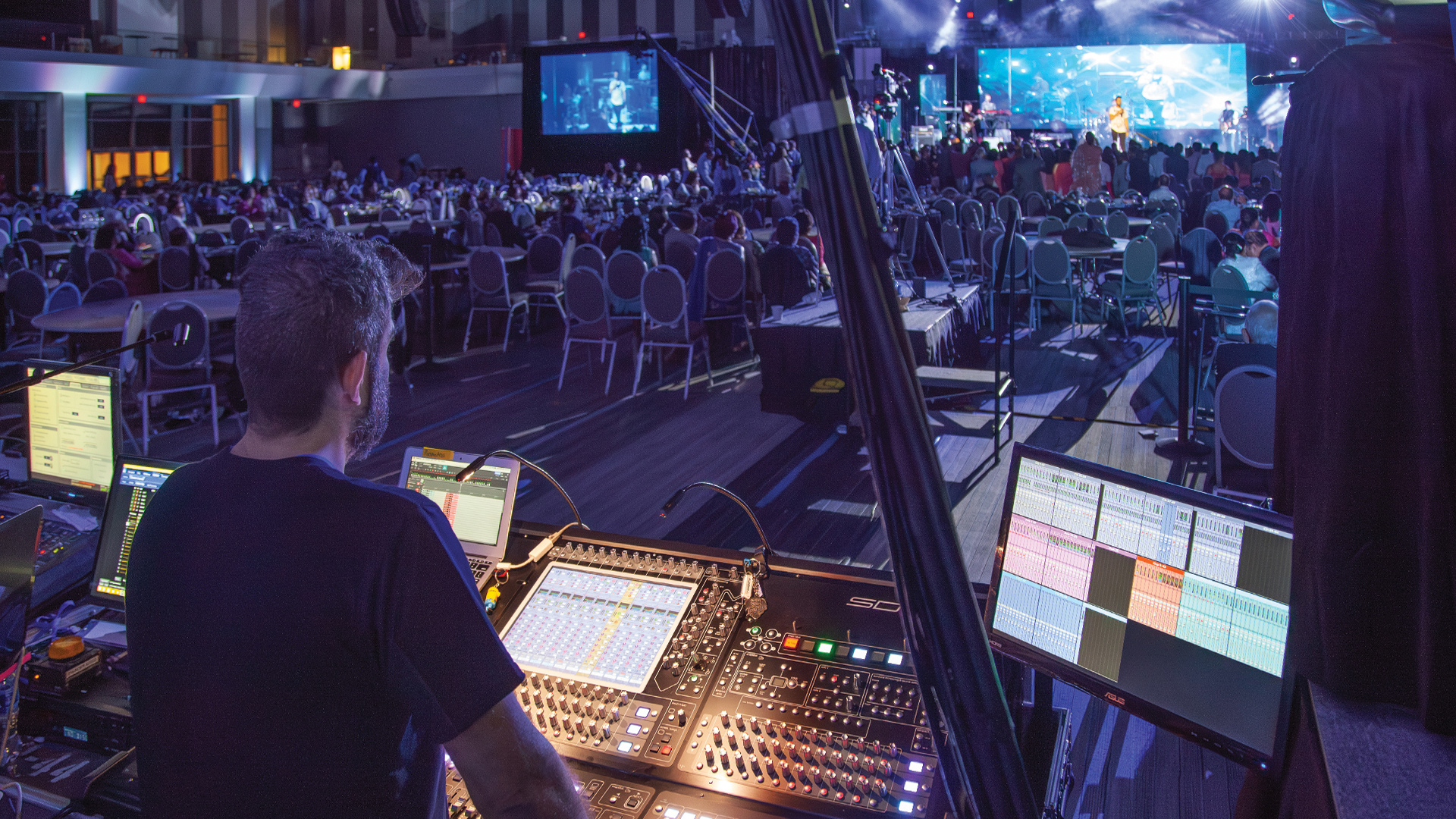
Not every festival ends at midnight. Some of the most technically demanding battery-powered LED deployments in the world occur at events where music and visual production continue for 24 consecutive hours or more — the extended electronic music marathon format that defines events like Dekmantel in Amsterdam, Time Warp in Mannheim, and the Awakenings all-nighters at the Gashouder in Amsterdam. These productions place demands on battery-powered fixture systems that standard deployment frameworks were never designed to address.
The 24-Hour Battery Challenge: A Math Problem First
The arithmetic of 24-hour battery-powered fixture deployment is unforgiving. The Astera Titan Tube carries a battery rated for 15 hours of continuous operation at full output — adequate for the most demanding single-day festival schedule, but insufficient for a continuous 24-hour production without a recharge window. A deployment of 200 Titan Tubes at a 24-hour event therefore requires either: a fixture inventory of at least double the onstage count (100% in service, 100% charging simultaneously); or a swap workflow that cycles fixtures through recharging during periods of reduced demand.
Production companies specializing in the extended format electronic music market — including Amsterdam-based Full Fat Rentals and Hamburg-based Ampco Flashlight — have developed battery management systems that treat fixture inventory like aircraft in a fleet management operation: continuous monitoring of state of charge, scheduled swap cycles coordinated with set breaks, and surge-capacity charging infrastructure that can fully restore a depleted fixture in under 4 hours.
Charging Infrastructure for Continuous Operations
The electrical infrastructure required to support continuous charging of 200 Titan Tubes simultaneously is significant. Each charging bay draws approximately 60 watts, meaning 200 simultaneous charging positions require approximately 12 kilowatts of continuous electrical load — comparable to the power draw of a small touring PA system. In a festival environment where power budgets are already under pressure, this charging load must be planned into the power distribution design alongside the PA, lighting control, and video systems.
The Astera Titan Tube 8-Bay Charging Case — which holds 8 tubes and draws approximately 480 watts — means that 25 charging cases are required for simultaneous charging of 200 tubes. These cases are typically deployed in a dedicated production backstage area rather than onstage, with a runner system transporting depleted fixtures from the show environment to the charging area and returning fully charged units during changeover windows. The logistics of this swap system rival the complexity of the show itself in terms of crew coordination.
Wireless Protocol Stability Over Extended Operations
Astera’s 2.4GHz wireless protocol was designed for events measured in hours, not days. The question of whether the system’s radio frequency performance degrades over extended operations — whether transceiver hardware heats up, whether battery-powered receiver circuits exhibit voltage-dependent frequency drift, whether the 2.4GHz spectrum at a festival becomes progressively more congested as the event continues — is a practical concern that experienced Astera operators have addressed empirically.
The consensus from production teams who have run Astera systems continuously for 20+ hours is that the wireless protocol’s primary vulnerability over extended periods is not hardware degradation but spectrum congestion. As a 24-hour event progresses, the RF environment changes: media crews arrive with broadcast equipment, security teams deploy radio systems, social media activity peaks and troughs with crowd behavior. The solution adopted by full-day Astera deployments is periodic spectrum scanning at 6-hour intervals using a Wi-Spy DBx analyzer, with ART7 transceiver channel reassignment to clear bands identified during the scan. This 20-minute procedure, scheduled during low-activity periods, has proven sufficient to maintain reliable wireless performance across complete 24-hour events.
Creative Programming for Marathon Events
A 24-hour festival marathon presents a creative programming challenge that differs fundamentally from a standard multi-act event: the visual environment must sustain emotional engagement across a 24-hour arc that spans afternoon warmup acts, midnight peak-energy sets, pre-dawn comedown periods, and early morning second wind. No single visual vocabulary covers this range.
The lighting programmers working the grandMA3 consoles at 24-hour events develop what they call a diurnal palette — a pre-planned progression of visual moods organized by time of day that the operators use as a framework for live improvisation. The Astera wireless fixtures — with their wireless mobility and battery independence — are ideal tools for this creative approach because they can be repositioned during the event itself, adapting the visual architecture to the changing energy of each set without the infrastructure constraint of hardwired fixtures. An Astera AX1 PixelTube that serves as a table centerpiece at a cocktail hour warmup becomes a dramatic overhead installation element during a midnight peak set, simply by physically moving it and updating its position in the AsteraApp control grid.
Integration With Full Lighting Rigs
In the context of a full production lighting rig — Robe BMFL moving heads, GLP JDC1 hybrid strobes, Martin MAC Viper beams — the Astera wireless fixtures occupy a complementary role rather than a primary one. They excel at intimate accent lighting, scenic architectural illumination, audience area decoration, and effects applications that conventional hardwired fixtures cannot serve due to power and cable constraints. The grandMA3 integration via sACN ensures that wireless Astera fixtures participate in the full show programming, responding to the same cue triggers and timecode events as their hardwired counterparts, without requiring a separate programming environment or operator.
The combined result — a hardwired main rig handling primary stage wash and aerial effects, supplemented by a wireless Astera layer providing ambient architecture and scenic accent — defines the modern festival production design vocabulary. For a 24-hour event, this combination means the core production values remain consistent across the full duration while the wireless layer provides the creative flexibility to adapt the visual atmosphere to each passing hour, each artist’s personality, and each moment in the crowd’s extended collective journey.
