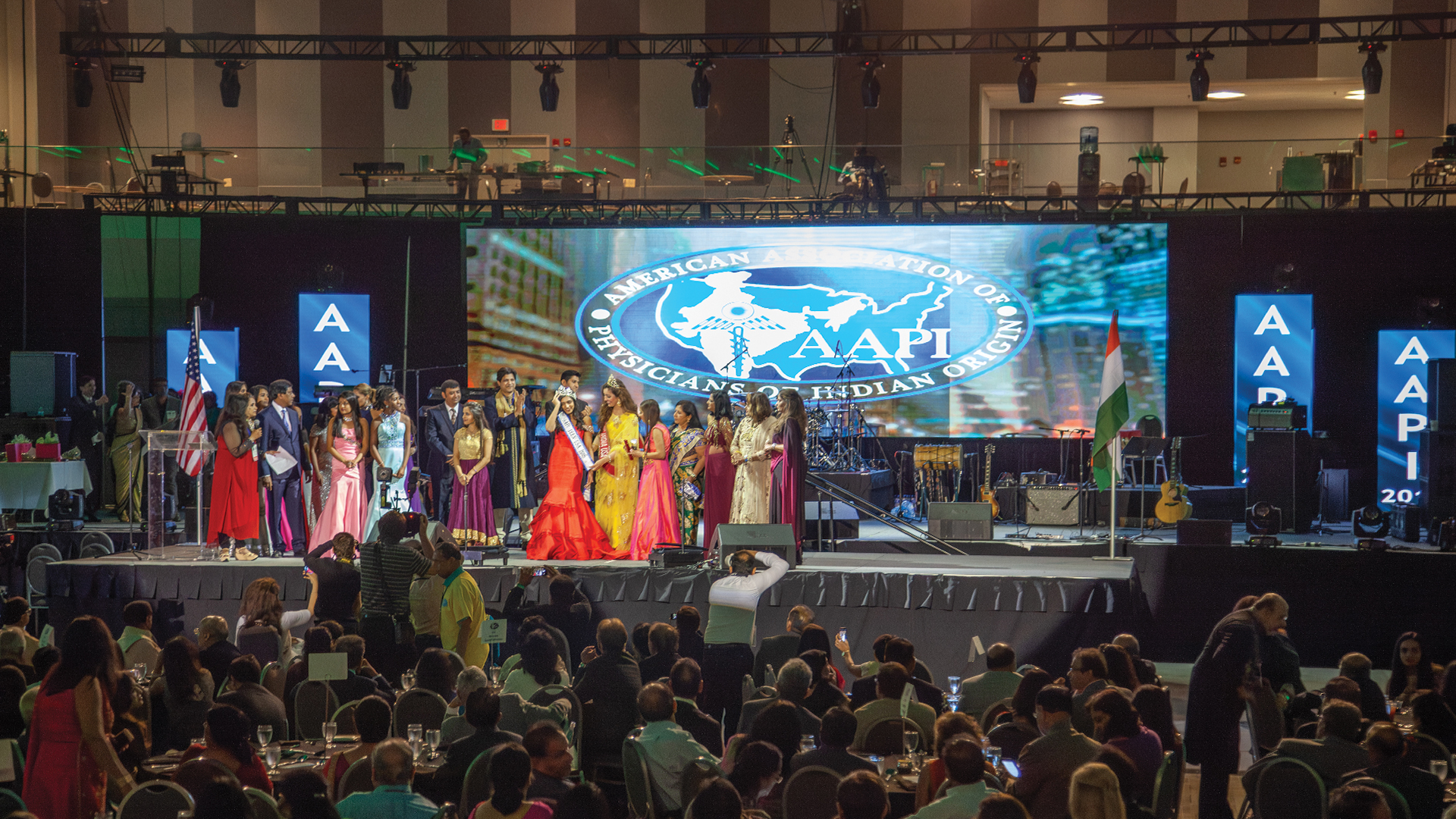
The operational demand that LED wall technology serves ranges from a 500-capacity corporate boardroom event—where the wall is 6 metres wide, seen from 4 metres, and evaluated with the critical attention of 50 brand managers—to a 100,000-capacity outdoor festival where the wall is 30 metres wide, seen from 200 metres, and evaluated by a crowd whose collective attention is the marketing asset the brand paid to access. These are not variations on a single production type. They are fundamentally different briefs whose shared technology—modular LED panels, media servers, content software—is deployed with radically different specifications, at radically different scales, and under radically different production conditions.
The production companies that serve the full range of this scale—from 500-capacity intimate corporate to 100,000-capacity stadium and festival—have built operational capabilities that single-tier specialists cannot match. The knowledge transfer between tiers is the commercial asset: the broadcast-quality calibration standards developed for small-room corporate events translate directly to broadcast-critical festival stage requirements; the high-density crowd management protocols developed for large outdoor events inform the staging discipline that smaller events need when their guest count exceeds expectations.
500–2,000 Capacity: The Intimacy Challenge
At 500–2,000 capacity events, the LED wall’s primary challenge is not output power—the audience proximity means that modest brightness levels produce the impact that festival-scale systems achieve through sheer lumens—but pixel pitch and color precision at viewing distances where individual pixels may be visible to the front-row audience. The 1.9mm and 2.6mm pitch panels that serve mid-scale productions well are at their operating boundary in this capacity range; audiences at 3–5 metres can resolve individual pixel structure in static content, creating the “screen door effect” that degrades the immersive quality the installation is intended to create.
Sub-1.5mm pitch panels—ROE Visual Diamond series, Unilumin UMini range—provide the pixel density that makes close-proximity viewing seamless, at a rental premium of 40–60% over 2.6mm equivalents. The commercial calculation for small-capacity events: is the client’s brief (and budget) better served by a smaller 2.6mm wall or a larger 1.9mm wall at the same panel cost? The answer depends on the specific viewing geometry, and experienced production designers make this judgment call explicitly rather than defaulting to a single specification across all capacity ranges.
Content design at this scale requires specific attention to the tonal range that human observers perceive at close proximity under controlled lighting conditions. The 16–235 legal broadcast range that large-venue content designers work to—avoiding the near-black and near-white values that create calibration-revealing anomalies—matters even more at small venues where the audience’s analytical proximity allows them to notice subtle calibration inconsistencies that distance would conceal.
2,000–15,000 Capacity: The Production Mid-Tier
The 2,000–15,000 capacity range represents the most commercially active tier of LED wall production, where the combination of budget availability, event frequency, and production ambition creates the highest volume of premium LED wall specifications annually. Arena-scale corporate events, major touring productions at mid-size venues, and regional festival headline stages all fall in this capacity range, and the production quality expectations of clients at this tier have converged toward the broadcast-quality standard that was once exclusive to the top-tier events they aspire to match.
D&b Soundscape and L-Acoustics Soundvision simulation tools—developed primarily for audio system design—have influenced the thinking that production designers apply to LED wall geometry design at this scale, creating a discipline of coverage simulation that asks which audience members receive which visual information from which display surface, and designs the LED infrastructure to serve every seat in the house rather than the front section of the floor. This audience-covering approach to LED wall design—scaling the display architecture to the venue geometry rather than specifying a single impressive-looking main wall—produces better audience experiences at mid-tier capacities than the single-large-wall approach that simpler production thinking defaults to.
Disguise gx 2c media servers have become the standard platform for this capacity tier because their dual-GPU architecture supports the real-time content processing that mid-tier productions demand without the infrastructure overhead of the high-density server clusters that top-tier productions require. The gx 2c’s output count—sufficient for a main LED wall, broadcast output, confidence monitor feeds, and auxiliary display positions in a single server—matches the output complexity of mid-tier productions without requiring the system engineer to manage the multi-server synchronization that larger-format productions impose.
15,000–100,000 Capacity: The Broadcast-Scale Brief
At 15,000–100,000 capacity, the LED wall installation enters broadcast-scale territory where the streaming audience routinely outnumbers the physical audience and the wall’s performance in front of cameras becomes the primary brief, with live audience performance becoming a secondary—though still commercially important—consideration. The production planning at this scale explicitly accounts for dual-audience optimization in every technical decision: pixel pitch selected against camera moiré testing at the specific focal lengths planned for the broadcast; brightness calibrated to broadcast exposure reference rather than live audience impact; content designed with the streaming viewer’s encoded video experience in mind alongside the live viewer’s direct experience.
Brompton Technology Tessera SX40 processing—the standard platform for broadcast-critical LED deployments at this scale—provides the per-panel calibration that ensures brand color accuracy across wall surfaces where uncalibrated panel-to-panel variation would be visible in close-up broadcast camera shots. The Tessera SX40’s processing density—managing 7.7 megapixels per unit—allows a complex multi-surface LED installation to be served by a manageable number of processing units rather than the rack of independent processors that pre-Brompton LED deployments required.
IMAN (IMT Management and Analytics Node) from Brainstorm multimedia has emerged as a planning tool for large-scale multi-surface LED installations, providing the project management and technical documentation infrastructure that complex LED designs at this scale require. The move from spreadsheet-based planning to dedicated LED project management tools reflects the operational maturity that the large-venue LED market has achieved.
Cross-Scale Lessons: What the Full Range Teaches
The production company that operates competently across the full 500–100,000 capacity range accumulates operational insights that single-tier specialists cannot generate. The most commercially valuable: the quality requirements at each tier converge rather than diverge as clients across all capacities have experienced the top-tier benchmark (through streaming, through competitor events, through brand inspiration reels) and brought those expectations into their production briefs regardless of their event’s capacity.
A 600-person corporate event in 2025 is specified against a brief that references Apple’s WWDC, which the client’s marketing team watched in 4K on YouTube. The LED wall their production budget can support is not a 4K direct-view display at Apple’s scale, but the color accuracy, content quality, and broadcast integration standards that WWDC embodies are the client’s benchmark regardless of scale. Production companies that understand this benchmark convergence invest in calibration quality and content design rigor at small-scale productions that previous generations treated as less commercially demanding.
The operational discipline transfer from large-scale to small-scale LED production is the investment that distinguishes premium production companies at every capacity tier. A production team that has managed Brompton calibration at a 100,000-person festival stage brings that calibration standard to a 600-person corporate event where the intimacy of the viewing distance makes calibration quality even more critical. This quality transfer is the commercial differentiator that separates premium production companies—who charge premium rates and earn premium client relationships—from those who treat small events as less deserving of their best operational discipline.
