Non-traditional venues present AV challenges that standard ballroom setups don’t address. Historic buildings, outdoor spaces, industrial facilities, and architecturally distinctive locations demand creative solutions that work within unique constraints while delivering professional-quality results. Success requires adapting technical approaches to each venue’s specific characteristics.
Comprehensive Site Assessment
Begin with detailed venue documentation before any technical planning. Photograph spaces from multiple angles, noting architectural features, ceiling heights, column positions, and potential obstruction points. Measure critical dimensions including power outlet locations, door widths for equipment access, and distances from potential technical positions to performance areas.
Document existing infrastructure including electrical panel locations, circuit capacities, and the path from power sources to intended equipment positions. Note any restrictions on attaching hardware to walls, ceilings, or floors. Identify ambient noise sources, natural light entry points, and acoustic characteristics that affect audio and video design.
Working with Architectural Obstacles
Columns, beams, and irregular room shapes create sight line challenges requiring multiple display positions rather than single screens. Map sight lines from all audience positions to identify locations where screens must be placed for complete coverage. Accept that some positions may have compromised views and plan supporting displays accordingly.
Audio coverage faces similar challenges when columns and alcoves create acoustic shadows. Speaker positions must be planned to reach all audience areas without creating excessive overlap that causes comb filtering. Distributed speaker systems using multiple smaller sources often serve irregular spaces better than concentrated high-power systems designed for conventional rooms.
Power Distribution Strategies
Unique venues frequently lack the robust electrical infrastructure purpose-built event spaces provide. Historic buildings may have insufficient amperage, outdated wiring, or limited circuit availability. Outdoor spaces might have no permanent power at all. Understanding actual power availability shapes equipment selection and may require supplementary power sources.
Generator placement for outdoor or power-limited venues requires coordination with audio plans to avoid noise interference. Position generators where exhaust and engine noise won’t reach microphones or audience areas. Run substantial cable lengths to bring clean power to equipment locations. Budget for qualified electricians to ensure safe, code-compliant temporary power installations.
Rigging in Non-Standard Spaces
Purpose-built venues include rigging infrastructure designed for production loads. Unique venues rarely offer these conveniences. Identify structural elements capable of supporting speaker and lighting loads safely. Engage structural engineers when hanging loads from unknown capacity points. Never assume a building element can support production weight without professional assessment.
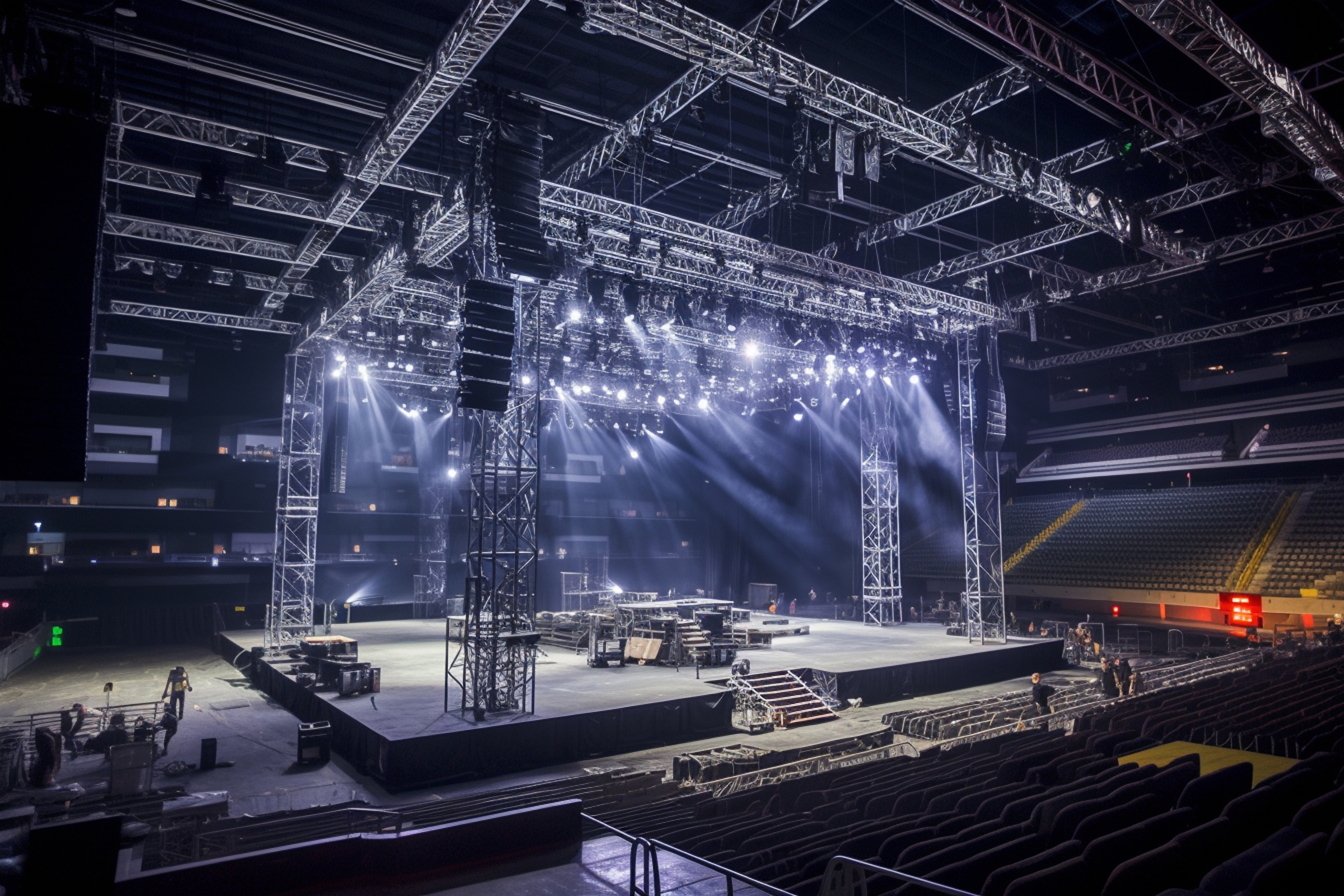
Ground-supported alternatives avoid rigging questions entirely. Truss towers and ground stacks achieve effective speaker and lighting positions without attaching to venue structures. These solutions require more floor space but eliminate liability concerns about venue attachment points. Many unique venue events rely entirely on ground-supported production.
Acoustic Adaptation Approaches
Unique venues often have challenging acoustics. Stone walls in historic buildings create harsh reflections. Industrial spaces with concrete floors and metal ceilings produce long reverberation. Glass-walled modern buildings focus and reflect sound unpredictably. These characteristics require acoustic treatment or system design adaptation.
Temporary acoustic treatment provides practical solutions for one-time events. Hanging fabric panels absorb reflections from walls and ceilings. Carpet or floor covering reduces floor reflections. Strategic placement based on identified problem areas delivers improvement without full acoustic remediation. Accept that temporary measures improve rather than solve acoustic challenges.
Outdoor Venue Considerations
Outdoor events lose the acoustic containment that indoor spaces provide. Sound propagates freely in all directions, requiring higher speaker output to achieve adequate levels at audience positions. Bass frequencies particularly suffer from lack of boundary reinforcement. Subwoofer quantities may need to double or triple compared to indoor equivalents.
Weather protection for equipment becomes paramount outdoors. Covered positions for consoles, amplifiers, and other sensitive equipment prevent moisture damage. Quick-deploy covers for speaker stacks protect during unexpected rain. Weather monitoring and clear decision protocols prevent equipment destruction and safety hazards when conditions deteriorate rapidly.
Video Display Positioning
Screen placement in unique venues requires balancing visibility, aesthetics, and practical constraints. Historic venues may prohibit blocking architectural features or attaching hardware to protected surfaces. Modern spaces with irregular shapes may lack natural focal points where screens would normally position.
LED walls offer flexibility that projection cannot match. Modular construction adapts to unusual spaces and aspect ratios. Higher brightness handles ambient light that would wash out projection. Self-contained systems eliminate the throw distance requirements projection imposes. Consider LED even when projection would serve adequately in conventional venues.
Cable Routing and Management
Signal and power cabling in unique venues often must travel long distances across visible floor areas or through spaces not designed for technical infrastructure. Plan cable routes early, identifying paths that minimize tripping hazards and visual intrusion. Use cable covers, ramps, and gaffer tape to secure cables in pedestrian paths.
Wireless alternatives reduce cable requirements where practical. Wireless microphones, in-ear monitors, and DMX transmission eliminate runs that would otherwise cross performance areas. Network-based audio and video transport can leverage existing building infrastructure when available. Balance the convenience of wireless against potential interference and reliability concerns.
Collaboration with Venue Management
Unique venue events require cooperation with facility management unfamiliar with production requirements. Explain technical needs clearly, using plain language rather than industry jargon. Provide written documentation of requirements, particularly for power and rigging, that facility staff can evaluate against their knowledge of building capabilities.
Respect venue rules even when they complicate technical approaches. Historic preservation requirements, insurance limitations, and operational constraints exist for valid reasons. Work within limitations rather than against them. Creative solutions that satisfy both technical requirements and venue concerns demonstrate professionalism that builds relationships for future events.
Planning Timeline Adjustments
Unique venues typically require more setup time than conventional facilities. Allow extra hours for problem-solving unexpected challenges. Build contingency time into schedules for discovering infrastructure limitations and implementing workarounds. The unfamiliarity that makes venues unique also creates uncertainty that requires schedule flexibility.
Pre-event testing becomes especially valuable in unique spaces. Visiting with key equipment before load-in reveals problems in time to plan solutions. Audio system tuning in the actual acoustic environment identifies frequency problems. Video positions can be verified for sight lines. The investment in advance testing prevents surprises during actual events.
Unique venues reward creative problem-solving with memorable events in distinctive settings. The technical challenges require additional planning and flexibility but enable experiences impossible in conventional facilities. Approaching these venues with thorough preparation and adaptive mindsets transforms constraints into opportunities for exceptional productions.
