When Atmospheric Effects Overstay Their Welcome
The Permanent Atmosphere
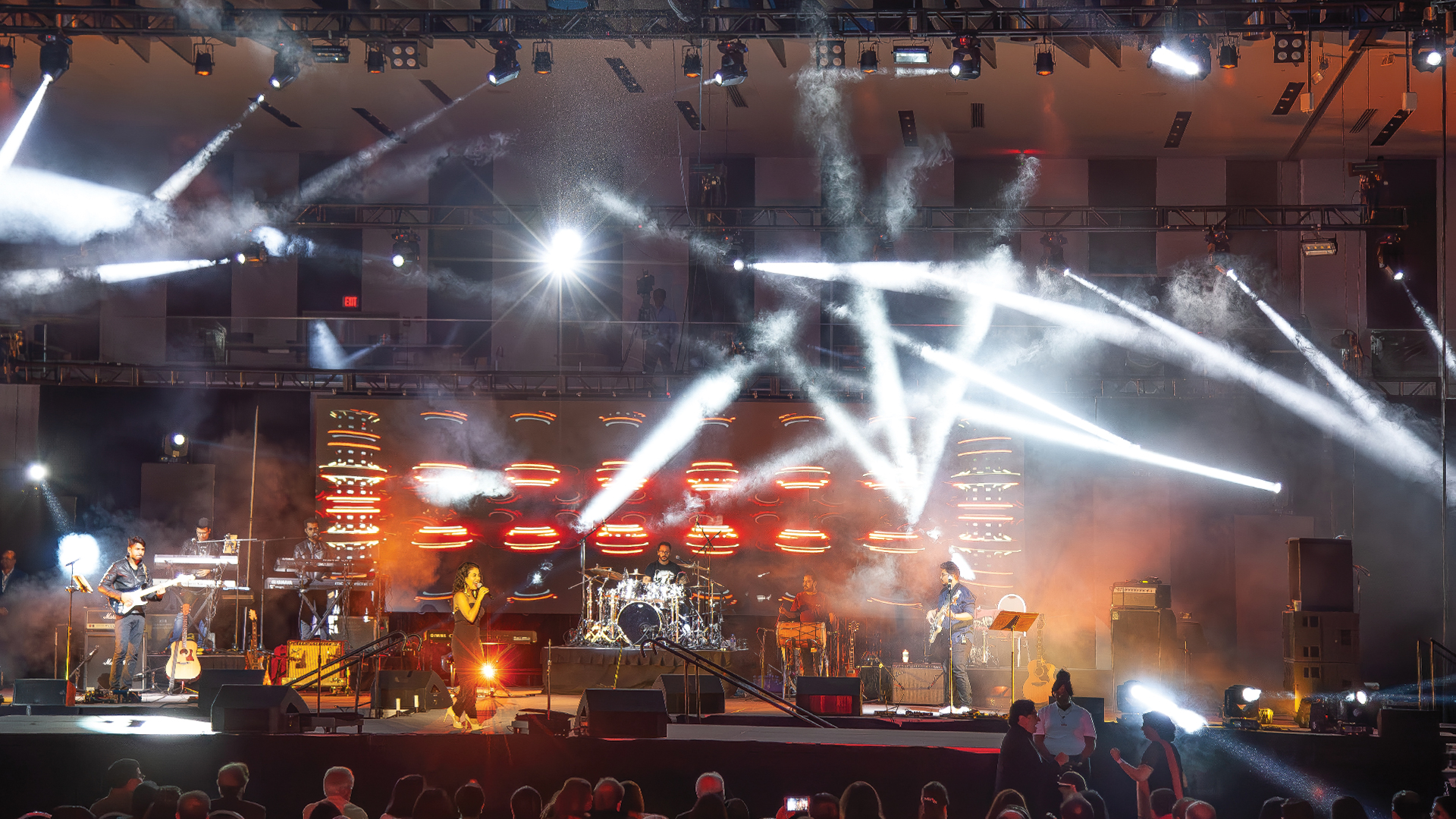
The lighting designer had programmed the fog effect to last precisely thirty-two seconds—a brief atmospheric enhancement for the dramatic bridge section before clearing for the final chorus. Ninety minutes later, the venue still resembled the inside of a cloud. The MDG ATMe hazer had stopped producing output on cue, but the atmospheric density had reached a self-sustaining equilibrium where no amount of waiting seemed to reduce visibility. The headliner’s encore happened essentially in a white void, with the audience mostly hearing rather than seeing the finale they’d paid premium prices to experience.
The Physics of Atmospheric Persistence
Understanding why fog refuses to clear requires examining the particle physics of theatrical atmospherics. The glycol-based fog particles from machines like the Martin JEM ZR44 range from 0.5 to 5 microns in diameter—small enough to remain suspended in still air almost indefinitely. Only air movement, particle aggregation, or surface deposition removes these particles once dispersed. In venues with minimal air circulation, fog can persist for hours after machines stop producing.
The haze from oil-cracking machines like the MDG MAX 5000 produces even finer particles—typically 0.2 to 0.4 microns—that remain airborne essentially until air handling systems remove them. These particles create the even atmospheric enhancement that lighting designers love for beam visibility, but their persistence means that accumulated haze from multiple cues can reach densities far exceeding any single application.
HVAC System Interactions
Venue air handling systems represent the primary mechanism for clearing theatrical atmospherics—and the primary reason fog sometimes refuses to leave. A properly operating HVAC system continuously replaces venue air at calculated rates, carrying suspended particles to filtration or exhaust. When these systems operate in unexpected modes—recirculation rather than fresh air, reduced fan speeds, or complete shutdown—fog clearance slows dramatically or stops entirely.
The communication failure between production management and venue operations frequently underlies persistent fog problems. Production teams assume HVAC will operate normally during shows, while venue engineers may reduce air handling to minimize noise or save energy. The advance process should establish specific HVAC requirements and confirm that venue operations will maintain agreed conditions throughout performances.
Historical Fog Persistence Incidents
The entertainment industry contains legendary stories of fog refusing to clear—some amusing, others less so. A 1990s arena tour reportedly fogged a venue so thoroughly that post-show load-out continued in near-zero visibility, with crew navigating by touch and intercom communication. A theatrical production’s fog effects triggered fire alarm activation when accumulated density exceeded detector thresholds, evacuating the audience mid-performance and requiring fire department verification before readmission.
The health concerns associated with prolonged fog exposure have generated periodic controversy. While modern theatrical fog fluids from manufacturers like Ultratec and Rosco meet safety standards when properly used, concentrated exposure over extended periods can irritate respiratory systems. Actors’ Equity and IATSE contracts include provisions addressing atmospheric effects exposure, reflecting historical incidents where performers and crew reported health impacts.
Prediction and Prevention Strategies
Preventing fog persistence begins with understanding the specific venue before deploying effects. Site surveys should identify HVAC system capabilities, air change rates, and operational constraints that affect atmospheric clearance. Testing fog behavior during technical rehearsals—including timing clearance after machine shutoff—reveals whether planned effects will clear as expected.
Conservative programming provides insurance against persistent fog. Rather than programming maximum output and trusting clearance timing, experienced designers build effects that achieve desired density with margin for environmental variation. Using multiple smaller applications with clearance intervals rather than single massive bursts maintains controllable density that responds better to adjustment.
Emergency Clearance Techniques
When fog refuses to clear and show requirements demand visibility restoration, emergency interventions become necessary. Coordinating with venue HVAC to maximize air exchange—switching to full fresh air mode, increasing fan speeds—accelerates natural clearance. Some productions maintain portable high-velocity fans for directing airflow toward intake vents, actively pushing fog into air handling systems.
The nuclear option of opening venue doors to exterior air creates effective but uncontrolled clearance. This approach works when climate permits—exterior conditions reasonably match interior—but creates problems when temperature or humidity differentials are significant. The venue that opens doors on a humid summer day may exchange fog for condensation that creates its own visibility and safety issues.
Communication and Expectation Management
Managing client expectations around atmospheric effects helps prevent the conflicts that arise when fog persists longer than anticipated. Production proposals should clearly describe atmospheric effects’ characteristics, including the potential for persistence that exceeds programmed durations. Corporate clients in particular may not understand that fog operates differently than lighting or video—you can’t simply turn it off and have it immediately disappear.
The show caller must maintain communication with atmosphere operators about actual versus intended conditions. Real-time awareness of developing fog density enables adjustment before persistence becomes problematic. The intercom check that includes ‘atmosphere status’ as standard call creates the information flow necessary for managing effects that have their own timeline independent of console programming.
