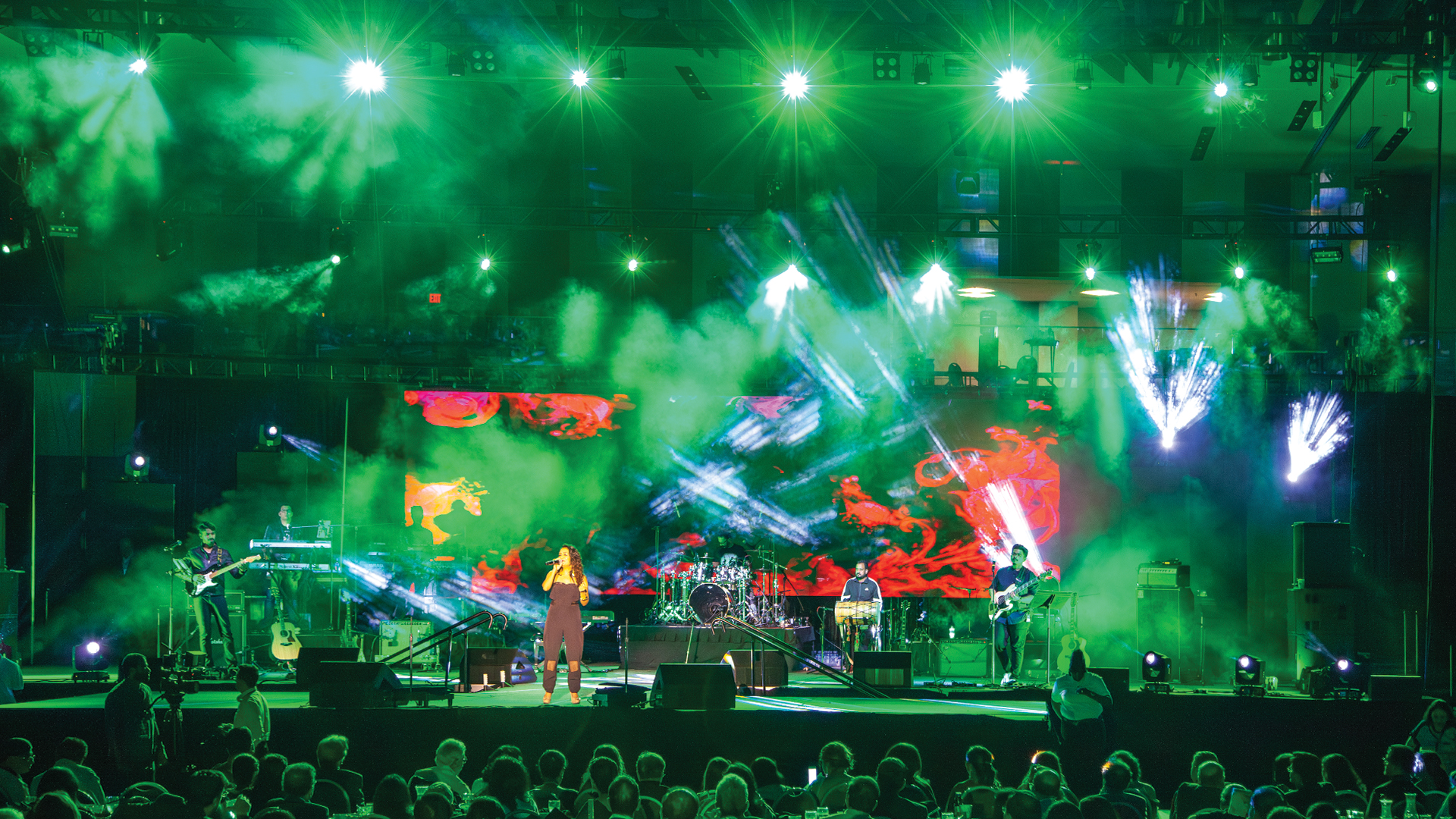
The atmospheric effects were supposed to create an ethereal moment—wisps of haze catching the light as the lead singer delivered the emotional climax. Instead, the MDG theONE fog machine unleashed a biblical cloud that swallowed the entire stage, obscured the video walls, and triggered the venue’s fire suppression system to enter pre-alarm status. The production manager stood at the monitor position, watching several hundred thousand dollars of equipment disappear into what looked like the inside of a cumulus cloud.
The Science of Manufactured Atmosphere
Creating controllable stage fog has occupied theatrical technicians since the early days of opera. The first recorded use of stage smoke effects dates to 1768, when David Garrick at Drury Lane Theatre used rosin burned on hot coals to create mysterious atmospheres. The results were unpredictable, irritating to performers’ lungs, and posed genuine fire risks—but audiences loved them.
Modern fog and haze technology has evolved considerably from burning rosin. Glycol-based fog fluids vaporized through heating elements produce dense clouds, while oil-based haze creates finer particles for light-catching effects without obscuring visibility. CO2 effects provide dramatic low-lying fog that stays close to the stage floor. Cryogenic systems using liquid nitrogen generate spectacular plumes that dissipate quickly. Each technology has its applications—and its ways of going catastrophically wrong.
The Physics of Misbehavior
Fog particles don’t read stage directions. They respond to air currents, temperature differentials, and atmospheric pressure in ways that defy precise control. A haze machine that produces perfect results during morning tech rehearsal might behave completely differently when three thousand audience members change the room’s thermal dynamics. HVAC systems that were barely noticeable during setup can create invisible air rivers that push fog into unintended locations.
The show where the fog went rogue featured a high-output fog system installed in positions that had tested well during load-in. But nobody had accounted for the venue’s HVAC switching from cooling to heating mode as outside temperatures dropped. When the system made that transition mid-show, airflow patterns reversed, and the carefully planned fog dispersion became chaotic redistribution.
Brand Wars and Fluid Chemistry
The atmospheric effects industry features fierce loyalty to specific manufacturers and equally fierce opinions about fluid formulations. MDG generators are known for producing extremely fine, long-hanging fog that doesn’t oil out onto surfaces. Le Maitre units offer reliable performance across their range. Ultratec specializes in cryogenic effects. Each brand’s equipment performs optimally with its own fluids—and using third-party fluid can void warranties while producing substandard results.
The chemistry matters more than most technicians realize. Fog fluid composition determines particle size, hang time, and how the fog interacts with lighting. Cheap fluids can leave residue on lenses, costumes, and instruments. Some formulations trigger respiratory reactions in sensitive performers. The production designer who specifies “fog” without understanding these variables often discovers their artistic vision clouded by unexpected chemical realities.
Fire Alarm Diplomacy
Every venue technical director knows the conversation: production wants dense atmospheric effects; the building’s fire detection system disagrees. Modern smoke detection technology can’t reliably distinguish between theatrical fog and actual combustion products. Some venues have invested in systems with sensitivity adjustments for entertainment use, but many simply require fire watches and manual overrides that introduce human error into safety equations.
The relationship between atmospheric effects technicians and fire marshals has evolved into a specialized diplomacy. Understanding local codes, establishing communication protocols, and documenting fog system specifications in advance can mean the difference between artistic vision realized and production shut down mid-show. The most experienced SFX coordinators maintain relationships with fire officials across multiple jurisdictions, knowing that a familiar face often smooths regulatory pathways.
Hazer Versus Fogger: The Eternal Debate
The distinction between haze and fog confuses even industry professionals. Haze creates an ambient effect—fine particles dispersed throughout a space to make light beams visible without obscuring vision. Fog produces localized density, dramatic clouds that define specific moments or spaces. Different machines, different fluids, different applications.
A DF-50 hazer from Reel EFX generates oil-based haze that hangs beautifully in still air but can create slippery floors if overused. A Look Solutions Unique 2.1 produces water-based haze that’s safer for delicate electronics but dissipates faster, requiring continuous operation. The Antari HZ-500 offers budget-friendly hazing for smaller productions, while the MDG ATMe represents premium technology for broadcast applications where even minor atmospheric imperfections become visible.
Low Fog Systems and Their Ground-Level Drama
Creating fog that hugs the stage floor requires either chilling standard fog or generating effects designed to stay low. CO2 low fog systems like the Ultratec CLF 4500 produce dramatic ground-hugging effects by releasing compressed CO2 through specialized nozzles. The rapid expansion chills surrounding air, creating fog that initially stays low before gradually warming and rising.
The challenges with low-lying fog include inconsistent floor coverage and the oxygen-displacement hazard of CO2 accumulation in poorly ventilated spaces. A theatrical production learned this lesson dramatically when performers in a sunken orchestra pit became lightheaded after heavy CO2 effects settled into their playing area. The fog looked magnificent from the audience perspective; the musicians experienced something closer to altitude sickness.
Cryogenic Effects: Beautiful and Dangerous
For pure drama, nothing matches liquid nitrogen effects. A cryogenic jet system can produce explosive plumes that shoot upward dramatically before dissipating rapidly. The effect appears to emerge from nowhere and vanish just as mysteriously—perfect for reveals, pyro-style moments without fire permits, and any application requiring immediate visual impact without lingering haze.
But liquid nitrogen operates at minus 320 degrees Fahrenheit. The safety protocols for cryogenic effects exceed most other production technologies. Storage dewars require specialized handling. Distribution lines must maintain proper temperatures or risk catastrophic failures. Personnel exposure limits are strict and unforgiving. The production that casually adds “cryo jets” to their effects list often doesn’t realize they’ve just committed to extensive documentation, additional insurance, and crew with specific certifications.
The Camera’s Perspective
Broadcast productions add another variable to atmospheric management: how fog reads on camera differs dramatically from live perception. What looks like subtle haze in the venue might appear as impenetrable murk on video. The director of photography often requests atmospheric adjustments that seem excessive to the live audience experience, calibrating for the millions watching on screens rather than thousands present in person.
The video engineer must compensate for how fog interacts with their camera systems. Dense atmosphere reduces contrast, softens edges, and can create apparent exposure issues as particles scatter light. LED video walls perform particularly poorly through heavy fog—their pixel structure becomes visible as fog diffuses the imagery. Productions investing heavily in video elements often restrict atmospheric effects to protect their screen content from visual degradation.
Venue Ventilation and the Art of Air Management
Understanding HVAC interaction separates amateur fog deployment from professional atmospheric design. The air handling systems in performance venues move massive volumes of air continuously, and that air carries fog wherever thermodynamics dictates. A production manager who doesn’t coordinate with venue building engineers is essentially hoping for atmospheric luck.
Some venues have invested in theatrical HVAC modes that reduce airflow during performances, allowing fog to settle and hang rather than immediately dispersing. Others offer no such accommodation, and productions must work with—or around—constant air movement. The technical rider for fog-heavy shows increasingly includes HVAC specifications, treating climate control as crucial production infrastructure rather than building background.
Performer Health Considerations
The people breathing theatrical fog eight shows a week have legitimate health concerns that productions must address. While modern fog fluids are generally considered safe, cumulative exposure affects individuals differently. Some performers develop sensitivity over time; others experience immediate reactions to specific formulations. The Actors’ Equity Association and other unions have established guidelines for atmospheric effects exposure that balance artistic requirements against performer welfare.
Productions increasingly specify water-based fluids for areas where performers spend extended time, reserving glycol-based effects for moments when performers are distant from fog sources. Some companies have invested in medical-grade atmospheric fluids developed specifically for sensitive environments. The era of simply filling a space with whatever fog was available and expecting performers to cope has ended—replaced by more nuanced approaches to atmospheric occupational health.
Programming Fog for Repeatability
Modern DMX-controlled fog systems allow integration with lighting consoles, enabling programmed atmospheric cues alongside illumination. The grandMA3 or ETC Eos can trigger fog bursts, ramp haze output, and coordinate atmospheric effects with other production elements. But translating artistic intent into reliable fog behavior remains challenging.
The atmospheric effects programmer must account for equipment warm-up times, output variations between identical machines, and the fundamental unpredictability of particle behavior. A fog cue that worked perfectly at dress rehearsal might produce completely different results on opening night when humidity has changed, audience heat has altered airflow, or the machine’s heater element has aged slightly since last use. Building in margins and backup approaches is essential.
Lessons Written in Vapor
That production where fog swallowed the stage eventually recovered. The crew chief killed fog outputs entirely for two songs while HVAC extracted the excess atmosphere. The lighting designer compensated with tighter beam work that didn’t require atmosphere to look spectacular. By the show’s second half, a revised fog approach produced the intended effects without the unintended consequences.
The incident became a teaching moment. Subsequent shows in the tour included environmental monitoring, with temperature and humidity sensors feeding data to the atmospheric technician. HVAC coordination became standard practice. Fog machine positions were chosen with airflow patterns specifically considered. The production got better because the fog refused to behave—forcing improvements that benefited every subsequent performance.
Every special effects technician learns eventually: you can control what fog machines produce, but you cannot fully control where that fog travels. The atmosphere has its own agenda. Professional practice means understanding that agenda well enough to negotiate favorable outcomes—accepting that fog will never follow stage directions perfectly, but can be persuaded to approximate artistic intentions through technical understanding and persistent adaptation.
Keywords: atmospheric effects, MDG theONE, production manager, stage fog, fog and haze technology, glycol-based fog fluids, oil-based haze, CO2 effects, liquid nitrogen, haze machine, high-output fog system, atmospheric effects industry, MDG generators, Le Maitre, Ultratec, fog fluid composition, production designer, venue technical director, smoke detection, atmospheric effects technicians, SFX coordinators, haze and fog, DF-50 hazer, Look Solutions Unique 2.1, Antari HZ-500, MDG ATMe, CO2 low fog systems, Ultratec CLF 4500, low-lying fog, liquid nitrogen effects, cryogenic jet system, safety protocols, atmospheric management, director of photography, video engineer, LED video walls, HVAC interaction, air handling systems, theatrical HVAC modes, technical rider, theatrical fog, Actors’ Equity Association, water-based fluids, medical-grade atmospheric fluids, DMX-controlled fog systems, grandMA3, ETC Eos, atmospheric effects programmer, crew chief, lighting designer, atmospheric technician, special effects technician
