The director called cut on a live switching session at NBC Sports during a major outdoor athletics event and turned to find that three of his eight camera operators were looking at the wrong part of the track. It was not insubordination. It was a communication failure that had been building across four hours of production. The technical director at the switcher had been calling cameras by number. The camera operators on the field were hearing those numbers filtered through IFB earpieces competing with crowd noise, wind, and the ambient hum of a massive PA system. Two operators had transposed numbers during a frequency-crowded handoff and never corrected. On live television, multi-camera coordination failure is broadcast in high definition to millions of people.
The History of Multi-Camera Production: From Three Cameras to Forty
Television multi-camera production was born in the late 1940s and early 1950s, when CBS and NBC began using three-camera setups for live variety shows and sporting events. The iconoscope camera of the era was a bulky, immobile instrument that required significant lighting to produce a usable picture. Coordinating three of them was a logistical achievement that required clear communication hierarchies and standardized camera numbering that persist to this day.
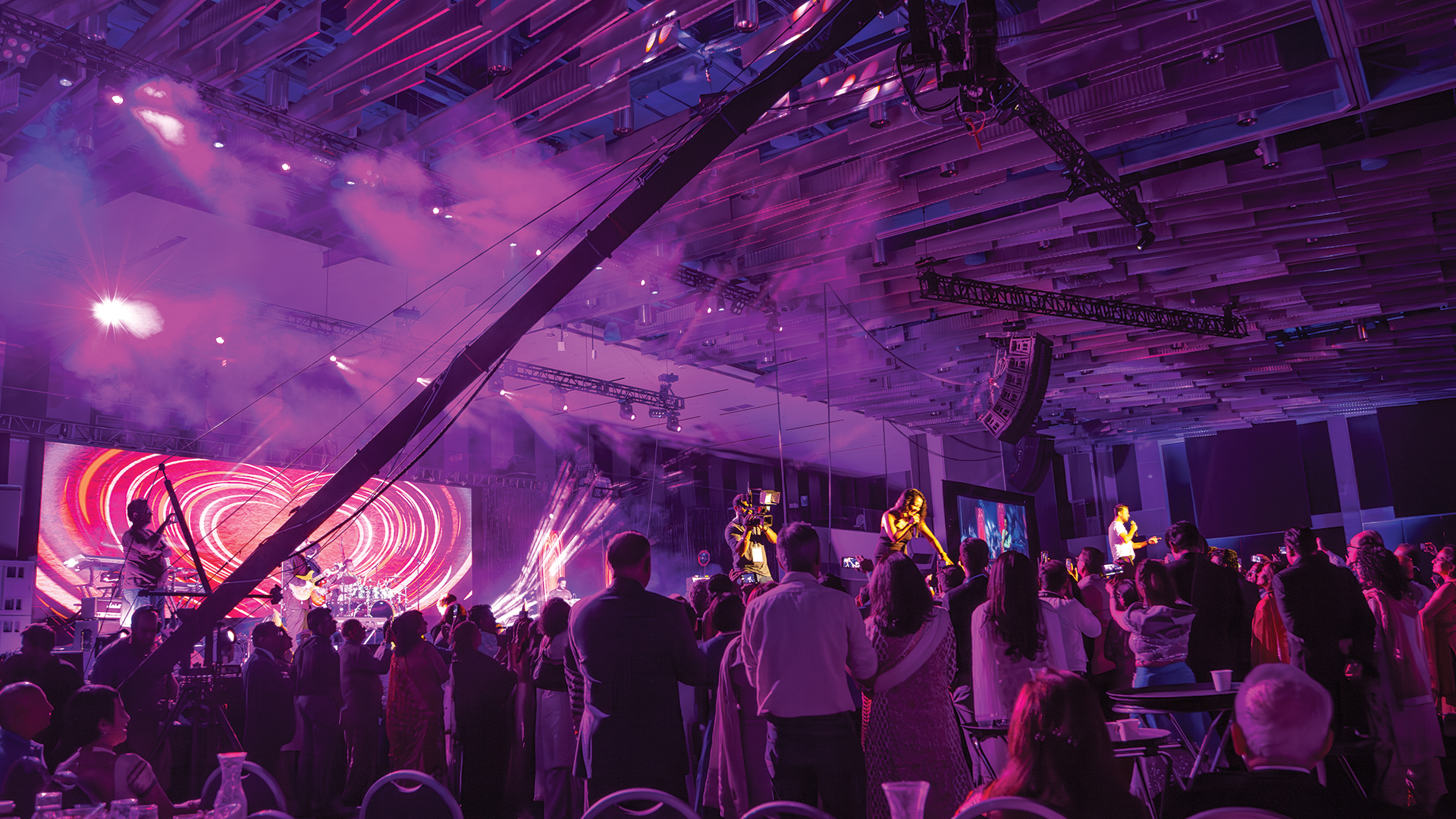
Modern live production — a Super Bowl broadcast, an Olympic opening ceremony, a stadium concert for a major touring artist — may deploy 40 or more camera positions, including cranes, jibs, track-mounted systems, wireless handheld cameras, and remotely operated robotic cameras. The coordination infrastructure required to keep all of them serving the director’s vision simultaneously is a discipline that has evolved over 70 years of live television production.
The Role of the Technical Director and Camera Ops Communication Chain
In broadcast production, the technical director (TD) operates the production switcher — typically a Ross Video Ultrix, Grass Valley Korona, or Sony XVS-9000 — and executes cuts, dissolves, and effects on the director’s calls. The TD is the interface between the director’s creative vision and the physical signal routing that puts images on screen. In live event production without broadcast infrastructure, the video director or IMAG director often serves a combined role.
Camera operators receive direction through two primary channels: the program intercom and the return feed monitor. Experienced operators develop a continuous awareness of what is on air versus what they are framing, adjusting their shot composition to anticipate the next cut rather than react to the last one. This anticipatory camera work is the difference between a camera op who can be cut to at any moment and one who is perpetually half a second behind the director.
Camera Numbering, Shot Lists, and the Pre-Production Communication Framework
Professional multi-camera productions establish camera numbering before equipment arrives on site. The convention — cameras numbered left to right from the audience’s perspective, with specialty positions (jib, crane, handheld) numbered sequentially after fixed positions — is not universal, but the critical requirement is internal consistency. Every member of the production team must use the same camera numbering system throughout the event.
Shot lists distributed to camera operators before the event give each operator an understanding of their expected framing contributions to each segment of the show. Tools like Yamdu, StudioBinder, and Celtx are used in pre-production to build and distribute shot lists that can be accessed on tablet or phone by each camera op during the event. A camera op who knows they are expected to provide the wide safety shot during the opening number is making better decisions than one who is guessing.
Wireless Camera Systems and the RF Challenges of Multi-Camera Deployment
Wireless camera systems — transmitting live video via RF or microwave links from the camera position to a centralized receive point — have transformed what is possible in live production but have also introduced a new category of coordination failure: signal interference between systems.
Systems like the Teradek Bolt 6 XT and Paralinx Arrow operate in the 5GHz spectrum and are subject to interference from other devices operating in the same band. A multi-camera deployment with eight wireless camera systems plus wireless audio, wireless intercom, and the general RF environment of a large venue requires formal spectrum coordination that maps every wireless video, audio, and communication channel to prevent overlap.
The frequency coordination plan for a complex multi-camera live event should be completed before the production day and reviewed with every department head whose systems contribute to the RF environment. This coordination happens at the pre-production stage. On site, during load-in, is too late.
Robotic and Remote Cameras: Expanding Coverage Without Adding Bodies
Robotic camera systems — PTZ (pan-tilt-zoom) cameras operated remotely from a central control position — have become a standard tool for expanding camera coverage in situations where manned positions are impractical. Systems like the Sony BRC-X1000, Panasonic AW-UE150, and Telemetrics RCCP-MK3 allow a single operator to manage multiple robotic camera positions, dramatically changing the coverage-to-crew ratio possible in complex productions.
The limitation of robotic cameras in live event production is response latency and the inability to anticipate unscripted moments. A skilled manned camera op reads the room — sensing when a performer is about to move, when an audience reaction is building — and frames for it. A robotic camera responds to operator input after the moment has already begun. Understanding this distinction and designing coverage plans that use robotic cameras for planned, predictable shots while reserving manned positions for dynamic coverage is the nuanced production decision that separates competent multi-camera direction from exceptional work.
Communication Systems That Hold It Together
The intercom architecture for a complex multi-camera production is not an afterthought — it is a foundational design decision that determines whether the director’s calls reach operators in time to act on them. Clear-Com FreeSpeak II wireless intercom systems allow camera ops full freedom of movement while maintaining reliable two-way communication. The partyline channel keeps all camera operators on the same feed from the director, while individual point-to-point keys allow the director or TD to address specific cameras without interrupting the full crew.
Productions increasingly use confidence monitors — small on-camera reference screens showing the program feed — mounted directly on the camera to give operators a constant reference of what is currently on air. This real-time context reduces the mismatch between what an operator is framing and what the director needs, and is one of the most practical workflow improvements in multi-camera live event production of the past decade.
